About the Tulsi Plant
 Holy Basil (Ocimum tenuiflorum, Ocimum sanctum) as it is know as around the world is a plant with a history going back in time, according to the scriptures the Tulsi plant grew around the crucification of Jesus Christ. Not only has it been mentioned in the Bible but in the Puranas and Vedas the sacred writings of ancient India.
Apart from the historical references in religious texts the Tulasi plant as it is called in Sanskrit means “the incomparable one” has been proven to be extremely beneficial to humans not only in terms of oxygenating air but in many walks of life. Holy Basil is used in ayurvedic remedies for common colds, headaches, stomach disorders, inflammation, heart disease, various forms of poisoning, and malaria.
Traditionally, Tulasi is taken in many forms: as an herbal tea, dried powder, fresh leaf, or mixed with ghee. Essential oil extracted from the plant is also used in the production of herbal toiletry. The dry leaves of the Sacred Basil plant have been mixed with grains while in storage as they repel insects.
Tulasi is considered to be an adaptogen, balancing different processes in the body, and helpful for adapting to stress. Marked by its strong aroma and astringent taste, it is regarded as a kind of "elixir of life" and believed to promote longevity.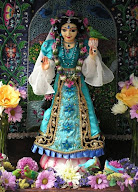 In India the presence of a Tulsi plant symbolizes the religious bent of a Hindu family. In Vaishnavism (Believers of Lord Vishnu), a household is considered incomplete if it doesn't have a Tulasi plant. Many families have the Tulsi planted in a specially built structure, which has images of deities installed on all four sides, and an alcove for small earthen oil lamp.
Places that tend to inspire concentration and places ideal for worship, according to the Gandharva tantra, include "grounds overgrown with Holy Basil plants".
Posted in: Holy Basil, Ocimum sanctum, Tulsi Devi, Tulsi Plant on Tuesday, April 22, 2008 at at 2:41 AM 3 comments


